
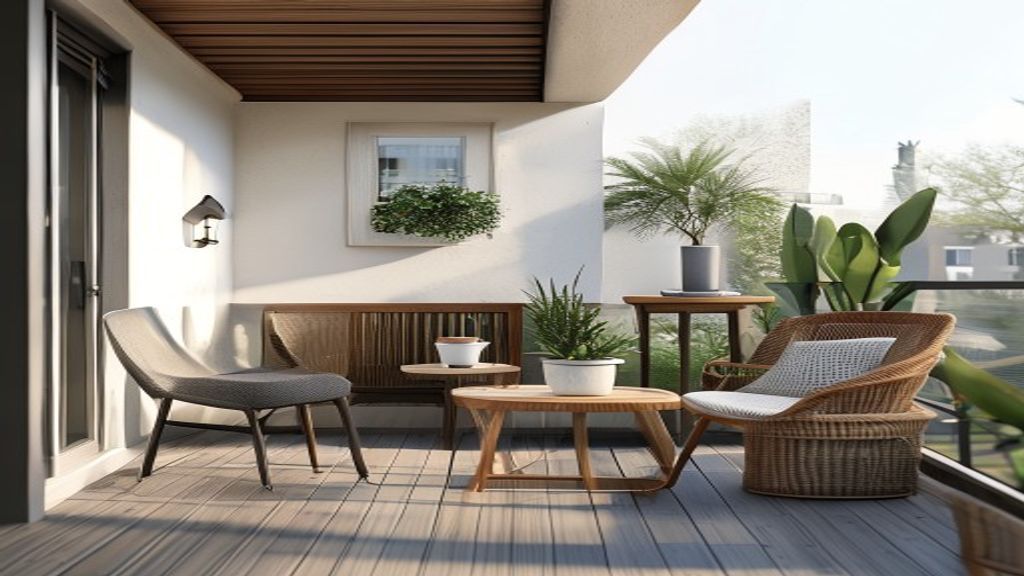
The best outdoor furniture material is not the one that photographs best. It is the one that can survive your weather, fit your maintenance tolerance, and still feel right in a small patio or balcony after the first rush of buying it has passed.
Outdoor furniture usually gets bought on aesthetics and regretted on maintenance. A woven set looks soft and inviting in a product photo. A teak table feels like the grown-up choice. A metal frame seems practical enough until it sits in direct sun, catches water the wrong way, or starts looking cheaper than expected after one hard season outdoors.
Choosing between teak, aluminum, and wicker is not a style decision first. It is a durability, maintenance, and visual-weight decision. The material that looks best on day one is not always the one that still feels smart in August.
If you want the quick verdict, here it is: aluminum is usually the safest low-maintenance choice, teak is the strongest long-term investment if you are willing to care for it, and wicker works best when comfort matters and the scale stays restrained.
Quick Verdict by Buyer Type
Start here if you want the shortest answer:
- Choose aluminum if you want the least upkeep, the cleanest lines, and the easiest fit for a small patio or balcony.
- Choose teak if you want warmth, longevity, and a material that can age beautifully when maintained properly.
- Choose wicker if you want a softer, more relaxed look and are buying for comfort first, not the lightest footprint.
If you are still unsure, aluminum is the best default for most people because it is the hardest to regret.
The fastest answer if you hate maintenance
If you already know you do not want to oil wood, think about storage covers, or baby a finish through one more season, stop here and choose aluminum. Teak only wins when you actually want the warmth badly enough to maintain it. Wicker only wins when comfort matters enough that you are willing to accept more bulk in the space.
Low-maintenance buyers usually do best when they stop chasing the prettiest material and start choosing the one that will stay easiest to live with on an ordinary Tuesday.
What “lasting” actually means outdoors
When people say they want outdoor furniture that lasts, they are usually mixing together four different things:
- the frame holds up structurally
- the finish still looks decent after sun and rain
- the material does not become a maintenance burden
- the piece still feels right for the space after real everyday use begins
That last point matters more than people think. Furniture can technically survive outdoors and still become a bad buy because it traps heat, looks bulky, asks for too much upkeep, or makes a small balcony feel crowded every time you open the door.
A better question than “Which material is best?” is Which material holds up best under the conditions I actually have?
That means being honest about:
- full sun versus partial shade
- covered space versus open exposure
- humid climate versus dry heat
- whether you will realistically oil, cover, wipe down, or store the furniture
- whether the space needs visual lightness or can tolerate more bulk
Once those constraints are clear, the right material usually becomes much easier to see.
1. Aluminum: the low-maintenance default that makes the most sense most often
For most patios and balconies, powder-coated aluminum is the easiest material to live with. It is light, rust-resistant, easy to move, and visually cleaner than many bulkier outdoor furniture formats.
That matters in small spaces. When furniture has slimmer legs, cleaner lines, and more visible floor beneath it, the space feels more open. Your eye can move through the layout instead of stopping at every thick arm or chunky woven base.
Where aluminum wins
- it handles rain and humidity well
- it is easier to move when a small layout needs flexibility
- it usually looks visually lighter than teak or wicker
- it asks for very little seasonal maintenance
- it works especially well for bistro sets, dining chairs, side tables, and upright lounge chairs
Where aluminum loses
The main downside is not durability. It is character. Lower-end aluminum can look flat or generic if the silhouette is uninspired, and very lightweight pieces can feel less substantial than teak or upholstered wicker seating.
Metal can also heat up in strong direct sun. That does not make aluminum a bad choice, but it does mean seat pads, cushions, or placement matter more in very hot climates.
Best for
- small patios and balconies
- buyers who want minimal upkeep
- furniture that may need to move or fold easily
- people who care more about ease and function than romance
Bottom line: if you want the safest low-maintenance answer, aluminum usually wins.
2. Teak: the best long-term material if you actually mean long-term
Teak earns its reputation. It is dense, naturally oil-rich, and well suited to outdoor exposure in a way cheaper woods are not. It also has the best warmth of the three materials. Good teak does not just survive outdoors. It settles into it.
But teak is also the material most likely to be misbought by people who want the look without the responsibility.
Where teak wins
- it has the richest and calmest visual presence
- it can last for years when the quality is real
- it feels more architectural and investment-worthy than most affordable metal or resin options
- it works especially well when you want an outdoor space to feel quieter and less mass-market
Where teak loses
Teak is not a maintenance-free material. Left alone, it will weather into a silvery-gray patina. Some people love that. Others buy teak because they want the warm honey tone and then feel disappointed once the color shifts.
That is where expectation matters. Teak only stays looking like new teak if you care for it. If you are not prepared for seasonal upkeep, teak turns from a dream material into a source of guilt.
There is also the budget problem. Most people are not really choosing between excellent teak and excellent aluminum. They are choosing between compromised teak and solid aluminum. In that comparison, aluminum often gives the cleaner value.
Best for
- buyers who want a real long-term investment
- covered or at least thoughtfully maintained outdoor spaces
- warmer, more natural styling
- people who do not mind cleaning and protecting the finish seasonally
Bottom line: teak is the best material if you want beauty and longevity and are willing to maintain both.
3. Wicker: the comfort material that needs more restraint than people think
Wicker is often the most immediately appealing material because it reads as comfortable before you even sit down. It softens hard surfaces quickly. It makes a patio look more relaxed. It can also make a small outdoor space feel much heavier than expected.
Modern outdoor wicker is usually resin woven over a frame. That means the real question is not just whether the weave looks nice. It is whether the structure underneath it is strong and whether the scale is disciplined enough for the space.
Where wicker wins
- it creates the softest, most inviting outdoor-living look quickly
- it can feel more comfortable than bare metal or wood seating
- it works well for lounge corners when the patio has enough room
- it helps hard surfaces feel less stark
Where wicker loses
The biggest issue is bulk. Thick arms, deep seats, and rounded woven frames consume more square footage—and visual air—than people expect. In a narrow patio or balcony, that extra mass can make the space feel crowded even before you add cushions.
Cheap wicker also tends to reveal itself faster than good aluminum or good teak. Once the weave starts looking tired or the frame underneath feels weak, the whole piece can shift from “inviting” to “dated” very quickly.
Best for
- patios that have a little more breathing room
- comfort-first buyers
- one or two accent pieces rather than a full bulky matching set
- outdoor setups where softness matters more than visual lightness
Bottom line: wicker can work well, but in small spaces it usually performs best in moderation.
Which material works best in a small patio or balcony?
If the space is genuinely compact, the ranking changes.
For most small patios and balconies: 1. Aluminum is the smartest first choice. 2. Teak comes second if the proportions are restrained and the budget is real. 3. Wicker comes last unless the layout is larger than it first appears.
That does not mean wicker is objectively worse. It means it is less forgiving in tight layouts. Aluminum keeps the space lighter. Teak can still work beautifully, but it needs stronger editing. Wicker has the highest risk of making the footprint feel smaller than it already is.
A simple way to think about it:
- if you want the space to feel lighter, choose aluminum
- if you want it to feel warmer, choose teak
- if you want it to feel softer, choose wicker
Then ask whether the square footage can actually support that mood without losing function.
The buying mistakes that make a material age badly
1. Buying the full set before understanding the space
Matching sets look efficient online, but they often assume more square footage than a real balcony has. A slimmer table with two better chairs usually beats a bulky package deal.
2. Underestimating maintenance resentment
Teak is not a good buy if you already know you will not maintain it. The material is not the problem. The mismatch is.
3. Confusing comfort with scale
The most comfortable-looking chair is not always the one that works best in the space. An upright aluminum or teak chair may get used more than a deeper wicker seat simply because it preserves movement.
4. Confusing cheap with affordable
Low-cost wicker is not affordable if it looks exhausted by next season. Cheap wood is not affordable if it cracks or stains badly. The better buy is the one that keeps earning its footprint.
The better way to choose
If you want outdoor furniture that actually lasts, make the decision in this order: 1. define the job of the space 2. measure the real furniture zone 3. choose the maintenance level you will truly tolerate 4. pick the material that matches those limits 5. only then decide whether you want the final look to feel lighter, warmer, or softer
What to buy first if you already know your material
If the material decision is already clear, these are usually the smartest first-format buys:
- aluminum: a slim bistro set, narrow dining chair pair, or compact side table for the lightest footprint and easiest upkeep
- teak: one dining table, one side table, or one bench-quality anchor piece that gives the space warmth without overfilling it
- wicker: one accent chair or one restrained lounge piece, not a full matching conversation set unless the patio is larger than it first appears
The mistake is buying the whole look at once. One strong material-aligned piece is usually more useful than a five-piece set that looked generous online and cramped in real life.
Quick shopping shortcuts by material
- Powder-coated aluminum bistro sets for the easiest small-space default and the least maintenance friction.
- Teak side tables if you want warmth without committing the whole patio to a heavier teak footprint.
- Teak dining tables if you want one serious anchor piece and are willing to maintain it.
- All-weather wicker accent chairs if comfort matters most and the patio can handle more visual bulk.
- Slim aluminum side tables for the lowest-risk second purchase in a tight balcony layout.
If you want lower-cost browse routes, AliExpress is strongest here for aluminum, wicker, and teak-look/slatted wood formats rather than heirloom-grade solid teak.
AliExpress browse paths by material
- Powder-coated aluminum bistro sets if you want the cheapest clean-lined starting point.
- Teak-look outdoor side tables if you like the warmer look but want a lower-cost browse path.
- Slatted wood-look outdoor dining tables if you want a larger anchor without paying true teak money.
- All-weather wicker accent chairs if comfort matters more than the cleanest footprint.
- Slim aluminum outdoor side tables for the lowest-risk add-on in a tight balcony layout.
If you still need broader layout help before buying, start with How to plan a better outdoor space.
If you already know you want format-level product picks for a genuinely tight footprint, move next to The Best Affordable Outdoor Furniture for Small Patios and Balconies.
For most people, that process ends with aluminum. For some, especially those who want a more elevated natural look, it ends with teak. Wicker should be the answer when you specifically want the comfort and softness it brings and the space is large enough to support its bulk.
The best outdoor furniture material is not the most aspirational one. It is the one that still feels sensible after heat, rain, upkeep, and a full season of real use.
FAQ
What outdoor furniture material lasts longest?
Teak usually has the strongest long-term lifespan when the quality is high and the owner is willing to maintain it. But for many people, aluminum ends up being the better real-world answer because it creates far less upkeep friction.
Is aluminum better than wicker for a small balcony?
Usually yes. Aluminum is visually lighter, easier to move, and less likely to crowd a tight layout. Wicker can still work, but it needs more restraint and a better sense of scale.
Does teak outdoor furniture require maintenance?
Yes. Teak can weather naturally, but if you want to preserve its warmer tone and cleaner finish, seasonal care is part of the deal.
What outdoor furniture material is easiest to care for?
Aluminum is usually the easiest. It handles weather well, asks for very little upkeep, and tends to stay the simplest material to live with in everyday use.