
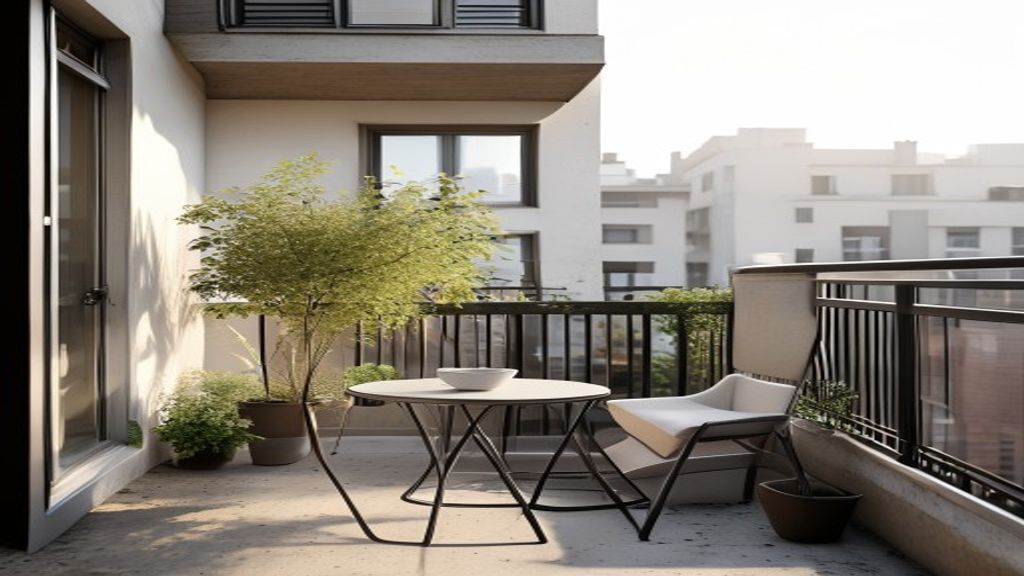
Affordable outdoor furniture works best when it is chosen by footprint, material, and daily use rather than by the promise of a full patio makeover. Here is how to pick compact pieces that feel durable, useful, and calm in a small outdoor space.
A small patio or balcony can make a bad furniture purchase feel expensive very quickly. The wrong table blocks the doorway. A deep chair eats the walkway. Cushions that looked inviting online turn soggy after one stretch of rain and suddenly need more maintenance than the space can realistically support.
That is why affordable outdoor furniture is not really about finding the lowest price. In a compact space, the better question is whether the piece earns its footprint. The strongest small-space setups usually come from a few restrained decisions: one clear use, a realistic layout, durable materials, and furniture formats that still leave room to move.
Start with the job of the space
Before comparing finishes or scrolling through sets, decide what the space needs to do most often.
For some homes, that means coffee in the morning and a place to read at the end of the day. For others, it means a compact dining setup for two. Sometimes the goal is simply to have one comfortable seat outdoors without turning the entire balcony into a storage problem.
This part matters because small outdoor spaces rarely improve when they are asked to do everything at once. A narrow balcony does not need a loveseat, a dining table, extra stools, and a row of oversized planters just because the product listing suggests a full look. It usually works better when one anchor piece leads and one secondary piece supports it.
A useful rule is simple:
- if the main goal is coffee, work, or light meals, start with a bistro table or a slim café-style set
- if the goal is reading or evening lounging, start with one comfortable upright chair and a small side table
- if the space needs flexibility, folding chairs or stackable seating often make more sense than fixed lounge furniture
Affordable pieces tend to look better when they are not forced into the wrong role.
Measure the space before you compare furniture
In small patios and balconies, dimensions on a product page are not background information. They are the whole decision.
Measure the full width and depth of the usable area, then account for what interrupts it: the door swing, railing clearance, awkward corners, walls that narrow the footprint, and the space needed to pull a chair out properly. What remains is the real furniture zone.
It also helps to mark that zone on the floor before buying anything. Painter’s tape, cardboard, or even folded towels can give a rough sense of how much room a table or chair will actually occupy. A piece that sounds compact in inches can still feel bulky once it is sitting in front of the only path through the space.
This is where many affordable patio sets go wrong. They are sold as convenient bundles, but the table and chair proportions are often designed for a general patio size rather than a genuinely tight balcony. In a compact footprint, slimmer silhouettes usually win over matching abundance.
Choose materials that stay practical at an affordable price
For small-space outdoor furniture, the best affordable material is often the one that asks the least from the owner while keeping the visual weight under control.
Powder-coated aluminum is one of the most reliable choices for compact patios and balconies. It is light, usually easy to move, and visually cleaner than bulkier furniture styles. It also handles weather better than many low-cost wood options, which makes it a strong fit for people who want minimal upkeep.
Powder-coated steel can also be a good value, especially for dining chairs, side tables, and folding sets. It usually feels sturdier than very lightweight options, but it is worth checking the finish quality. Once the coating chips badly, maintenance becomes less simple.
Acacia or other affordable wood options can look warmer and more settled than metal, especially against concrete, brick, or neutral siding. The tradeoff is maintenance. If the space is uncovered and exposed to strong sun or frequent rain, wood only stays affordable if you are willing to care for it seasonally.
All-weather resin or wicker-style pieces are common for a reason: they soften the look of an outdoor area and often feel comfortable quickly. But they need restraint in small spaces. Chunky woven frames can take up more visual and physical room than expected, which is why they work better as a selective accent than as a full bulky set on a narrow balcony.
The best material choice is usually the one that matches both the weather and your tolerance for upkeep. There is little value in buying the cheaper piece if it becomes the one you avoid using because it feels fussy.
The furniture formats that tend to work best in small outdoor spaces
Not every outdoor furniture type scales down well. Some categories naturally suit compact spaces better than others.
Bistro sets remain one of the smartest affordable buys for balconies and petite patios because they solve a specific job cleanly. They offer a place to sit, eat, or work without requiring the footprint of a full dining setup.
Slim dining chairs or folding chairs are useful when flexibility matters more than softness. They work especially well for spaces that need to stay open during the day.
One upright lounge chair with a side table often performs better than a small loveseat. It gives the space a clearer purpose and usually preserves more circulation.
Nesting tables or compact side tables are often better than coffee tables outdoors. They hold the essentials without fixing a large block in the center of the floor.
Garden stools and lightweight benches can also earn their place because they do more than one job. In a small layout, that kind of versatility matters more than matching a showroom image.
What usually underperforms is the oversized conversation set: low seats, thick cushions, broad arms, and a central table that assumes far more square footage than a small patio actually has. Even when those pieces are labeled affordable, they often cost more in lost space than they save in price.
Quick picks by small-space use case
- Slim bistro set for coffee, light meals, or a compact work setup that does not eat the whole balcony.
- Upright outdoor lounge chair if the goal is one comfortable seat without giving up too much circulation.
- Folding dining chair pair if the space needs flexible seating that can disappear when it is not in use.
- Narrow side table or garden stool if the main setup already works and you only need a small surface for drinks, books, or a planter.
These are deliberately format-led picks rather than exact product endorsements. In a small outdoor space, the right footprint matters more than chasing the cheapest full set.
Buy for everyday use, not just the first impression
The most convincing small outdoor spaces feel easy on an ordinary Tuesday, not just styled for the first day of spring.
That means thinking beyond the purchase itself. Will the cushions dry quickly? Can you move the chair without dragging it awkwardly through the doorway? Does the table leave enough room for two people to sit without turning sideways? Will the finish still look decent after a full season outdoors?
Affordable furniture tends to be most successful when it reduces friction rather than adding ceremony. Quick-dry surfaces, simple frames, and pieces you can wipe down easily usually age better in real life than overbuilt sets with too many separate parts.
This is also where visual weight matters. Furniture with open legs, slim frames, and visible floor beneath it tends to make a balcony feel larger. Heavy bases and thick arms do the opposite. In a compact outdoor space, that visual difference can matter almost as much as the measurements.
The mistakes that make a small patio feel crowded
A few buying mistakes appear again and again in compact outdoor spaces.
The first is choosing a full set before understanding the layout. A matching package can feel efficient, but it often leaves no room to edit.
The second is overvaluing softness. Deep cushions and low lounge shapes may feel inviting in theory, but they often dominate a balcony that needs lighter proportions.
The third is treating every edge like an opportunity for another item. Once a small space holds seating, a useful surface, and perhaps one or two planters, it is usually close to enough. Extra furniture rarely makes it feel more complete. It usually just makes movement less pleasant.
The last mistake is confusing cheap with affordable. The least expensive option is not the best value if it rusts, fades badly, traps water, or feels uncomfortable within a few weeks. A small outdoor space asks so much of each piece that durability becomes part of affordability.
A better way to build the space
If the budget is limited, start with one strong anchor and one practical support piece.
That might mean a compact metal bistro set for dining, or one well-scaled chair with a narrow side table for lounging. After that, live with the setup for a week or two. If the space still feels open, then consider a rug, an extra stool, or one additional chair. If it already feels full, stop there.
This slower approach usually leads to a better result than buying an entire outdoor look at once. It keeps the space useful, protects the budget, and makes each addition easier to judge.
The best affordable outdoor furniture for small patios and balconies is rarely the most elaborate option. It is the one that fits the footprint, survives the weather reasonably well, and supports the habits that actually happen there. In a compact outdoor area, that kind of restraint is what makes the space feel finished.