
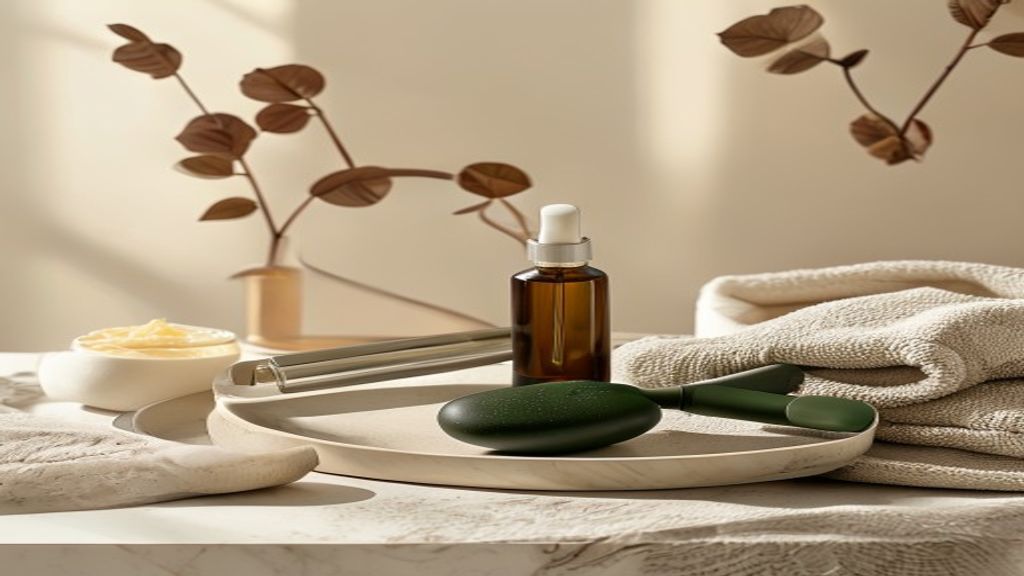
A practical, tool-led guide to facial fascia massage: what it can realistically do, what to use, and how to build a safe 3-to-5-minute de-puffing routine at home.
If your face feels puffy in the morning or your jaw looks tense after a day at a screen, the fix is usually not another heavy cream. A simple fascia facial massage routine can help move fluid, soften muscle tension, and make the face look more awake for a few hours. You only need three things: slip, a tool that matches your pressure tolerance, and a repeatable upward-and-outward sequence.
The important caveat: this is not a permanent facelift or a medical treatment. Think of fascia massage as a low-cost maintenance ritual. Done gently and consistently, it can support temporary de-puffing, circulation, and tension relief without turning your skincare routine into a professional appointment.
What is Facial Fascia?
Fascia is the connective tissue that sits beneath the skin and around the facial muscles. When it is hydrated and moving well, the face tends to feel softer and more flexible. When it feels tight — from clenching, stress, sleep position, or forward-leaning posture — the face can look heavier or more compressed.
Massage does not literally melt fascia. What it can do is apply gentle mechanical pressure, encourage movement through the tissue, and help you release areas where you habitually hold tension, especially around the jaw, brow, cheekbones, and neck.
What Facial Fascia Massage Can Actually Help With
- Morning de-puffing: light strokes can help move stagnant fluid toward the lymphatic pathways behind the ears and down the neck.
- Jaw and brow tension: slow pressure around the masseter and brow area can make the face look less clenched.
- Circulation support: massage creates mild warmth and blood flow, which can make the skin look brighter short-term.
- Temporary lifting effect: upward strokes can make the cheek and brow area look more open, but the result is temporary and depends on consistency.
Quick Shopping Shortcuts
Disclosure: these are site-controlled shopping links. Everyday Edit may earn a commission where affiliate tracking is available, at no extra cost to you.
- stainless steel / metal facial rollers — shop or compare this pick through the current merchant route.
- jade, rose quartz, or bian-stone-style gua sha tools — shop or compare this pick through the current merchant route.
- gua sha + roller bundles — shop or compare this pick through the current merchant route.
- jojoba/squalane facial oil — shop or compare this pick through the current merchant route.
Tool Kit at a Glance
- For de-puffing: choose a stainless steel face roller. It stays cold, feels gentle, and is easiest around the under-eye area.
- For fascia pressure: choose a stone-style gua sha. The flat edges and notches are better for the jawline, cheekbone, and brow.
- For beginners: choose a small roller-and-gua-sha set rather than buying a complicated tool collection.
- For glide: use jojoba, squalane, or another lightweight facial oil. The product matters less than having enough slip.
Preparation: The Slippery Skin Rule
Never drag a tool across dry skin. Cleanse first, then apply more oil than you would use as a normal moisturizer — usually 4 to 6 drops across the face, neck, and upper chest. The tool should slide easily. If your skin pulls, pauses, or turns sharply red, add more oil or reduce pressure.
Avoid facial massage over active irritation, inflamed acne, broken skin, fresh injectables, sunburn, or rosacea flares unless a qualified professional has cleared it for you. The goal is light tissue movement, not bruising or aggressive scraping.
Stainless Steel Face Rollers
A stainless steel roller is the easiest tool for morning puffiness. It is naturally cooling, non-porous, and gentle enough for the orbital bone when used with very light pressure. The larger end works well on cheeks and neck; the smaller end is better around the brow and under-eye area.
Best for: low-pressure de-puffing and quick morning use. What to avoid: pressing hard around the eye area or using a roller as if it can reshape bone structure. Use the quick-shopping route above if you mainly want a cold, simple de-puffing tool.
Stone Gua Sha Tools
A gua sha tool gives more targeted pressure than a roller. A heart-shaped, winged, or notched stone is the most versatile because it can hug the jawline, cheekbone, and brow. Use it slowly, at a shallow angle, and with enough oil that the tool glides rather than scratches.
Best for: jaw tension, cheekbone sweeping, and brow release. What to avoid: sharp pressure, fast scraping, or chasing redness. Use the gua sha route above if your priority is deeper fascia-style pressure rather than cooling.
Facial Oils for Glide
Facial oil is not optional here. It protects the skin from unnecessary pulling and makes the technique smoother. Squalane and jojoba are useful starting points because they are lightweight and give enough slip without feeling overly greasy for most skin types.
Best for: safe glide under a roller or gua sha. What to avoid: heavy fragrance if your skin is reactive, or using an oil that makes you break out. If you are unsure, patch-test first and keep the routine short.
Step-by-Step DIY Fascia Facial Massage Technique
The rule is simple: open the neck first, then move up and out. Keep pressure light to medium, repeat each stroke 5 to 10 times, and stop if your skin feels irritated.
Step 1: Open the Neck
Start at the side of the neck. Sweep gently down from behind the ear toward the collarbone. This gives moved fluid somewhere to go before you work on the face.
Step 2: Sculpt the Jawline
With the notched edge of a gua sha, start at the chin and glide along the jaw toward the ear. Pause near the earlobe with a small wiggle, then sweep lightly down the neck.
Step 3: De-puff the Cheeks
Use the long edge of the gua sha or the larger side of a roller. Start beside the nose and sweep outward toward the temple. Think slow ironing, not forceful scraping.
Step 4: Release the Brow
Use the small end of a roller or the curved edge of a gua sha. Sweep from the brow bone upward toward the hairline. For the area between the brows, use very small side-to-side movements before lifting upward.
Step 5: Finish With a Drainage Sweep
End with light strokes from the center of the forehead outward to the temples, then down the sides of the face and neck toward the collarbone. This final pass keeps the routine from leaving fluid at the sides of the face.
FAQ
What is facial fascia in simple terms?
Facial fascia is connective tissue under the skin and around the muscles. When it feels tight or restricted, the face can look puffy, clenched, or less mobile.
Can fascia facial massage de-puff your face immediately?
It can make the face look less puffy short-term, especially in the morning, because the strokes help move fluid. The effect is usually temporary rather than permanent.
Is gua sha or a face roller better for beginners?
A face roller is easier and gentler. Gua sha gives more targeted pressure, but it requires more attention to angle, oil, and pressure.
Can I do fascia facial massage every day?
Yes, if your skin tolerates it and you keep pressure gentle. A short daily routine is usually better than one long, aggressive session.
Should I use facial oil before gua sha or face rolling?
Yes. Oil or another glide product is essential because it prevents tugging. If the tool drags, add more slip or stop.
Managing Expectations and Frequency
A 3-to-5-minute routine is enough. You do not need a long facial massage session every night. The best use case is simple: use a roller when you want cooling and quick de-puffing, use gua sha when you want slower tension release, and use enough facial oil that the tool never pulls at the skin.
Within a couple of weeks, consistent users may notice that the jaw feels less clenched and the face looks more rested in the morning. The result is still maintenance, not transformation. That is the strength of the routine: it is inexpensive, repeatable, and easy to fold into a calmer beauty routine without pretending to be a professional treatment.